
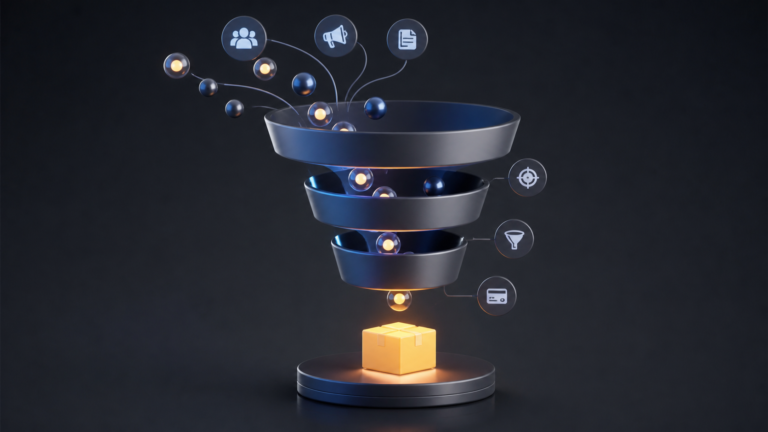
If you’re a solo creator or consultant asking how to build a simple digital product funnel, the fastest path is a lean, repeatable sequence: pick one clear offer, capture interest with a low-friction lead magnet, convert with a short pitch and easy checkout, then deliver and follow up with automated onboarding and an upsell. This article walks through each step with concrete examples, tool choices for one-person businesses, and ready-to-copy email and page templates so you can launch a working funnel without overengineering it.
Quick answer: the minimal funnel blueprint
A simple digital product funnel has five components you can assemble in a day or a few afternoons:
- Offer: one specific digital product (template, checklist, mini-course, or tool).
- Lead magnet: a free, useful piece of content that proves value and collects email addresses.
- Landing page: a single-page funnel to promote the lead magnet and capture opt-ins.
- Sales step: an email-driven pitch or a one-page sales page with a clear checkout link.
- Delivery + automation: immediate delivery, onboarding emails, and a simple upsell or subscription option.
Step 1 — Choose one clear product and a realistic price
Start with a single, focused digital product that solves a specific problem for a specific customer. Examples that work well for solopreneurs:
- Editable templates (proposals, invoices, social media calendars).
- Mini-courses or workshops (3–5 short lessons).
- Toolkits and plug-and-play resources (checklists, swipe files).
- Low-friction software or downloads (spreadsheets, scripts).
Keep the scope narrow — a smaller product is faster to finish and easier to sell. If you need help setting price ranges and packaging value, see our guide on how to price a digital product for solopreneurs.
Decide on pricing strategy
For a simple funnel, many solo sellers use a two-tier approach:
- Tripwire / low-cost front-end ($5–$50 range): lowers friction and converts cold traffic into buyers.
- Core offer ($25–$300+): the main product you want customers to own.
This ladder lets you test demand with a low-priced entry item, then present the higher-value product after a purchase. If you plan to generate the product with AI tools, check our article about how to create digital products with AI for practical tips and limitations.
Step 2 — Map the funnel stages and your conversion goals
Translate the five components into measurable stages and decide what success looks like at each one. A basic funnel map:
- Traffic → Landing page (goal: opt-in)
- Opt-in → Lead magnet delivery (goal: download/open)
- Lead nurture (1–5 emails) → Tripwire or sales page (goal: purchase)
- Purchase → Delivery + onboarding (goal: usage/activation)
- Post-purchase → Upsell or subscription (goal: repeat purchase)
Key metrics to track:
- Landing page opt-in rate
- Email open and click rates for your nurture sequence
- Checkout conversion rate (visitors to buyers)
- Average order value (AOV) and refund rate
Step 3 — Build the essential assets
You don’t need a full website to launch. Focus on the minimum viable assets:
- Landing page for the lead magnet (single column, one CTA)
- Thank-you / download page that confirms opt-in and introduces the paid offer
- Concise sales page or a short email pitch with a checkout link
- Automated delivery (instant download link or member area)
Tool choices for solo builders
Pick tools that minimize setup time and technical maintenance. Trade-offs to consider: built-in checkout vs. separate email provider, ease of delivery, fee structure, and customization.
| Tool | Best for | Pros | Cons |
|---|---|---|---|
| Gumroad | Selling downloads and simple products | Fast setup, built-in checkout and delivery | Limited branding/customization for pages |
| ConvertKit Commerce | Email-first funnels and creators | Integrated email automation + checkout | Less feature-rich storefront than ecommerce platforms |
| Carrd + Stripe/PayPal | Very simple custom landing pages | Low cost, highly customizable landing pages | Requires separate email tool and integration work |
For more guidance on platform trade-offs for selling templates and simple digital goods, our comparison of marketplaces and sellers is a useful read: Etsy vs Gumroad for Digital Products.
Step 4 — Automate the funnel with pragmatic workflows
Automation reduces manual work and makes your funnel predictable. The simplest technical approach uses tags or segments in your email tool to trigger sequences.
Basic automation flow (recommended)
- Visitor opt-ins → tag: “lead-magnet-A”
- Send immediate download email (delivery)
- After 1 day → nurture email #1 (value + soft mention of the product)
- After 3 days → nurture email #2 (case use + social proof or demo)
- After 5 days → sales email with checkout link (time-limited bonus optional)
- On purchase → tag: “customer”; send onboarding sequence and upsell offer
Example email sequence (copy-ready)
- Immediate delivery email
Subject: Here’s your [Lead Magnet] — plus one tip
Body: Quick thanks, direct download link, one short tip on using the resource, and a one-sentence preview of the paid product. - Value email 1 (Day 1)
Subject: How to get results from your [Lead Magnet]
Body: Short walkthrough, screenshot or example, CTA: “If you want the full template, see how it works here.” - Value email 2 (Day 3)
Subject: A simple tweak that saves hours
Body: Mini case/example of the paid product in action, social proof snippet if available, CTA to sales page. - Sales email (Day 5)
Subject: Last chance to grab [Bonus] with your purchase
Body: Clear benefits, what’s included, price, CTA to checkout, and reassurance about refunds/support.
Keep emails short, scannable, and focused on one next action. Use tags so people who buy stop receiving the sales sequence and begin onboarding messages instead.
Step 5 — Launch, measure, and iterate
With a functioning funnel, use small tests to improve performance
- Change one variable at a time: headline, lead magnet title, CTA color, or price.
- Track basic KPIs every week: opt-ins, email clicks, purchases, refunds.
- Collect qualitative feedback from early buyers — ask one or two simple questions after purchase.
Remember: small wins compound. Improve the opt-in headline by a few percentage points or reduce friction in checkout and your monthly revenue can grow without more traffic.
Example simple funnel for a templates seller
Scenario: You sell a $29 freelance proposal template.
- Lead magnet: “3 Proposal Paragraphs That Win Clients” (PDF)
- Landing page: one benefit headline, 2 bullets, email field, CTA
- Delivery email: includes the PDF + a “preview” screenshot of the full template
- Nurture emails (3): show how to use the template, testimonial excerpt, and a deadline for a small bonus
- Sales CTA: one-click checkout via Gumroad or embedded Stripe link
- Post-purchase: onboarding email with tips, and an upsell to a proposal package
This split of low-effort content and a single paid offer keeps the funnel manageable for a one-person business.
Common mistakes to avoid
- Too many moving parts: Don’t launch with a 10-email nurture, multiple upsells, and a membership all at once. Start simple.
- Overbuilt product: Avoid feature creep. A focused product that solves one real pain converts better than a broad “everything” product.
- Poor delivery experience: Slow or complicated delivery (manual emails, broken links) kills trust. Automate delivery from day one.
- No measurement: If you don’t track opt-ins and conversions you’ll be guessing which changes matter.
- Skipping onboarding: Buyer’s remorse often comes from lack of guidance. Send an immediate “how to get started” email after purchase.
Simple checklist to launch in a weekend
- Define product and price.
- Create lead magnet and sales page copy (one benefit-focused headline).
- Set up landing page + opt-in form.
- Integrate email tool and create two automated sequences: delivery + sales.
- Configure checkout and product delivery.
- Test the whole funnel (opt-in → delivery → purchase → delivery).
- Publish and drive your first 50–200 visitors (social posts, email list, or paid test).
Where this approach fits in your business roadmap
A simple funnel is ideal for months 3–6 after you’ve validated a product idea and want predictable, repeatable sales without building a full course platform or membership site. If you’re planning a longer-term product ecosystem, use this funnel to validate demand and collect customer feedback, then expand.
For broader advice on building a product-led business as a solo founder, read our guide How to Build and Sell Digital Products as a Solo Entrepreneur, and for product ideas that convert well for solopreneurs, see Best Digital Products to Sell Online.
Frequently asked questions
How much traffic do I need to make this work?
There’s no fixed number — conversion rate matters more when you’re starting. Focus first on a funnel that converts (even on small traffic). Once your opt-in and purchase rates are reasonable, scale traffic through content, partnerships, or low-cost ads.
Can I use marketplaces instead of a funnel?
Marketplaces (like Etsy) expose you to buyers but make it harder to build direct relationships. A marketplace plus a simple funnel (capture email after purchase or link to a lead magnet) can be a practical hybrid — compare those trade-offs in our Etsy vs Gumroad for Digital Products article.
Should I use AI to create product content?
AI can speed up drafting and idea generation, but you still need to edit, add unique insight, and ensure quality. Our article on How to Create Digital Products With AI covers best practices and ethical considerations.
What’s the simplest checkout option?
Use a platform that bundles checkout and delivery if you prefer minimal setup (e.g., Gumroad or an email tool with commerce features). If you want full branding control, a simple landing page plus Stripe checkout is flexible but requires slightly more setup.
Conclusion — your next step
Pick one product and follow the minimal blueprint: lead magnet, single landing page, short email nurture, and a friction-free checkout. Launch quickly, measure the core metrics, and iterate in small steps. If you need help on pricing or product ideas while you build, visit our guides on how to price a digital product, how to create digital products with AI, and how to build and sell digital products as a solo entrepreneur.